
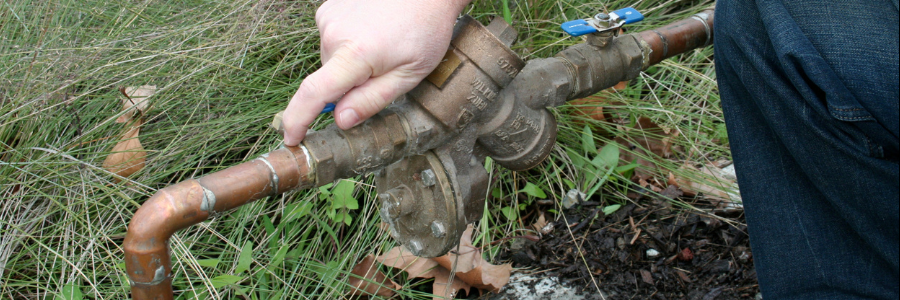

Once Marin Water delivers clean and safe drinking water to your home, certain conditions may cause backflow to occur. Backflow is the undesirable reversal of flow of water or mixtures of water and other substances back into the public drinking water system. This is usually caused by backpressure, which occurs when downstream pressure rises above the supply pressure. Examples of how backpressure may be caused would be: pumps, temperature increases in boilers, and elevation of water piping and fittings. Backflow can also be caused by back-siphon, which is negative pressure in the distribution system that can cause a vacuum in the water system. Examples of events that can cause back-siphonage are sudden operation of a hydrant or a water pipe/main breaks.
Cross connection or backflow is a connection between the public water supply and a consumers’ water system that could potentially introduce contamination or pollution into the public or private drinking water system.
Irrigation systems, hose bibs, boilers, radiant heat systems, wells, docks, ponds, fountains, pressure boosting systems, pools, spas, graywater systems, rainwater collection systems, reclaimed water, and solar heating systems are just a few examples of hazards that need to have backflow protection.
Backflow Preventers Protect Water Quality
The installation of a backflow preventer will protect drinking water systems from possible contamination.
There are four types of assemblies. If the District has done a survey of your residence or business, you will receive a letter letting you know which type of assembly is best suited for you and the location of where it must be installed. There are many brands to choose from, but your assembly must be on Marin Water’s list of approved backflow assemblies formulated by the University of Southern California Foundation for Cross-Connection Control and Hydraulic Research.
Having a backflow preventer installed at your meter protects only the public water system. There may be unprotected cross-connection issues within your property. If you have any questions, you may email us at Backflow@marinwater.org or call 415.945.1488. Refer to our list of certified testers to find a cross-connection specialist that can meet with you and conduct an in-depth survey of your home or business.
Scheduling annual inspections is required in order to ensure the public drinking water system is protected from possible contaminants. A visual inspection of an air gap is sufficient, but backflow assemblies must be tested by a certified backflow prevention assembly tester using a properly calibrated gauge.
Backflow Assembly Testers
Backflow assembly testers play a vital role of keeping the public drinking water system safe and clean by preventing backflow. Marin Water relies on backflow assembly testers to submit accurate information in a timely manner.
New Testers
All new testers must submit an online application in order to be added to the approved Marin Water testers list. After submitting the application, please scan and email copies of current certifications and gauge verification to Backflow@marinwater.org. After we have received all the documents, we will process the application and schedule a hands-on demonstration, held in April and October.
Backflow FAQs
What is a cross-connection?
A cross-connection is an actual or potential hazard caused by temporary or permanent connections between the public potable drinking water system and a consumer’s water system that could potentially introduce contamination or pollution into the public or private drinking water system.
What is a cross-connection program?
California water code requires that the water purveyor has the responsibility for protecting the public water supply. Marin Water meets these requirements through its cross-connection program. To do this, certified cross-connection control specialists conduct commercial and residential surveys to identify hazards to the public water supply. If a situation exists where pollutants or contamination have the potential to enter the public water supply, a cross-connection specialist can determine the appropriate steps to mitigate these hazards and preserve the safety of consumers.
What are some examples of hazards at my home that need to be protected with a backflow assembly or device?
Irrigation systems, fire suppression systems, boilers, radiant heat systems, wells, docks, ponds, fountains, pressure boosting systems, pools, spas, graywater systems, rainwater collection systems, reclaimed water and solar heating systems are just a few examples of hazards that need to have backflow protection.
What is a backflow prevention assembly and which one is best to install?
A backflow prevention assembly is a testable and repairable device used to keep potential contaminates or pollutants from entering the drinking water system during a backflow event. The two most common assemblies are:
- Double Check Valve Assemblies (DC)
- Reduced Pressure Principle Assemblies (RP)
If the District has done a survey of your premises, you will receive a letter informing you which type of assembly is best suited for the hazard and where it must be installed. While there are many options for approved assemblies, the assembly must be on the State’s approved backflow assemblies list. Marin Water has a list of recommended assemblies.
All installed assemblies must comply with Marin Water’s Cross-Connection Control Plan.
Does having a backflow preventer at my meter mean that my home/business is protected?
No. Having a backflow preventer installed at your meter only protects the public water supply. There may be unprotected cross-connection issues within your premise. For questions, contact Backflow@marinwater.org.
Will installing a backflow preventer affect the water pressure in my home?
Yes. Pressure drop from backflow prevention assemblies varies but typically ranges from 5 to 15 psi.
Can my backflow assembly be installed below ground?
Generally, below ground installations are not allowed, though are acceptable under certain circumstances. For mor information, contact Backflow@marinwater.org.
Why do I need to test my backflow assembly annually?
Annual testing of backflow assemblies is required under both Marin Water’s Cross-Connection Control Plan and SWRC Cross-Connection Control Policy Handbook.
Annual inspections are necessary to ensure the public water supply is protected from possible contaminates or pollutants. Backflow prevention assemblies use mechanical parts that can fail. A passing test ensures that these devices continue to function as intended. A failed test requires repair or replacement of the device followed by a passing test.
Non-compliance with this requirement can result in termination of water service, per Marin Water District Code.
Who is authorized to test my backflow assembly?
Marin Water maintains a list of certified testers. If your backflow assembly is tested by someone not on the list of certified testers, Marin Water cannot accept the test results. To become a certified backflow assembly tester, please refer to Backflow Assembly Tester Application.
How will I know if it is time for me to test my backflow assembly?
Marin Water will mail physical notices 45 days before your assembly is due to be tested. These notices are the size of postcards and printed on recycled paper. If you think your test is due, you lost your notification or are just curious about when your test date is, feel free to send us an email at Backflow@marinwater.org.
When is a backflow assembly installation required?
Backflow assemblies are required with new services, meter upgrades, fire suppression systems, water allotment changes, and when a cross-connection survey performed by Marin Water determines the need for one. Non-compliance with this requirement can result in termination of water service, per Marin Water District Code.
Why do I have a backflow assembly and my neighbor does not?
The requirement for a backflow assembly is based on actual or potential hazards within your premise. Hazards are often identified during cross-connection surveys when changes to the private water system occurs. If you feel that conditions have changed, and a backflow prevention assembly is no longer necessary, please reach out to Backflow@marinwater.org to schedule a site inspection.