
Marin Water’s Water Supply Roadmap is a long-term, adaptive strategy designed to ensure a reliable, resilient water supply for the communities we serve. The roadmap was developed following the 2020–2022 drought emergency and identifies a portfolio of projects to address projected supply gaps and changing climate conditions. The roadmap integrates both demand reduction (through water efficiency) and new supply projects to meet Marin Water’s goal of ensuring 8,500 acre-feet per year (AFY) of resilient water supply.
The District is actively advancing its most promising and cost-effective projects while remaining flexible to new information and opportunities.
What’s New
- Atmospheric River Capture (ARC) Project: The Project’s environmental review process initiated in March 2026. This process will evaluate potential impacts on wildlife, waterways, air quality, traffic and other factors and includes opportunities for public input. Marin Water will prepare the Project’s Environmental Impact Report (EIR) in compliance with CEQA. The draft EIR is currently expected to publish in summer or fall of 2026.
- Updated Roadmap Focus: Current priorities include water efficiency; the Atmospheric River Capture project; and in-system improvements including Soulajule system upgrades.
Water Supply Goal
Resiliency Goal: 8,500 AFY
This goal was set following the Strategic Water Supply Assessment and remains the benchmark guiding current and future water supply planning efforts.
Priority Elements of the Roadmap
The Roadmap is organized into five broad strategies, each with a range of projects, that – when integrated – are designed to address the District’s water supply needs to ensure a more resilient system. Click on each button below to expand details on the range of proposed and/or underway projects currently within each strategy.
Conservation
Conservation – Water Efficiency Master Plan Implementation, AMI, Water Loss Control
Water conservation continues to be a cornerstone of the roadmap. Based on updated supply demand projections and historical customer performance, Marin Water projects that, long-term, water efficiency will reduce the District’s overall 8,500 AFY water supply goal by 2,000 AFY.
Water Efficiency Master Plan Implementation
Marin Water is continuing its strong conservation efforts and will work to gain additional savings through implementation of the strategies in the District’s comprehensive and innovative Water Efficiency Master Plan.

Advanced Metering Infrastructure (AMI)
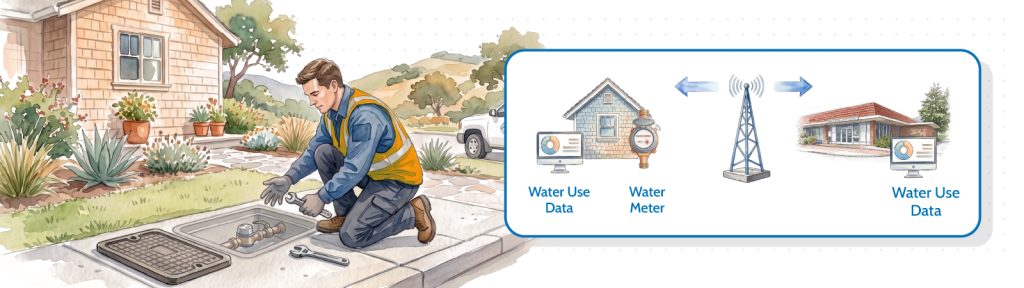
Marin Water will install smart water metering technology across the District’s service area over the next several years. This technology, also referred to as Advanced Metering Infrastructure (AMI), allows water use data to be transmitted through secure wireless communication to both Marin Water and customers, providing valuable water use data in nearly real-time. This technology can help Marin Water manage its water system more efficiently, identify leaks sooner and provide customers with better insight into their water use, helping all of us use this precious resource as efficiently as possible. Beginning in 2026, this is a large, service-area-wide project, and upgrading all 60,000 water meters is expected to be completed by 2034. Learn more.
Water Loss Control
Marin Water has long operated a proactive Leak Reduction Program to identify and address in-system water loss. A recent program review identified new opportunities to strengthen this work, several of which are now being implemented or tested as part of the Water Supply Roadmap.
Acoustic Leak Detection Pilot
The District’s core approach uses leak noise amplifiers to manually survey about 200 miles of pipeline each year, detecting leaks that might otherwise go unnoticed. While this traditional method is effective, Marin Water is now piloting newer acoustic leak detection technologies in two neighborhoods – Santa Venetia and Spinnaker Point. The pilot is testing three types of systems:
- Hydrant-based sensors, which detect leaks in water mains between hydrants.
- Meter-integrated sensors, installed near customer meters to monitor nearby pipelines.
- Valve-based sensors, that are attached to valves in the distribution system and can detect leaks in the pipelines.
The different systems are based on similar technologies and are being deployed in both neighborhoods to assess their performance, responsiveness, and potential for broader use.
In-System Improvements
In-System Improvements – Soulajule Enhancements, Phoenix-Bon Tempe Connection, Forecasting and Stream Release Automation
Water Conveyance Bottleneck Improvement
The District is investigating a series of projects to relieve distribution system bottlenecks, enabling the conveyance of additional supplemental water supply from Sonoma Water throughout Marin Water’s service area. These in-system improvements would allow for broader distribution of supplemental water for immediate consumption, while the Atmospheric River Capture (ARC) Project would store surplus winter water from the Russian River for later use during dry months and drought years.
Electrify Soulajule Pump Station
Estimated Water Supply = 420 acre-feet per year
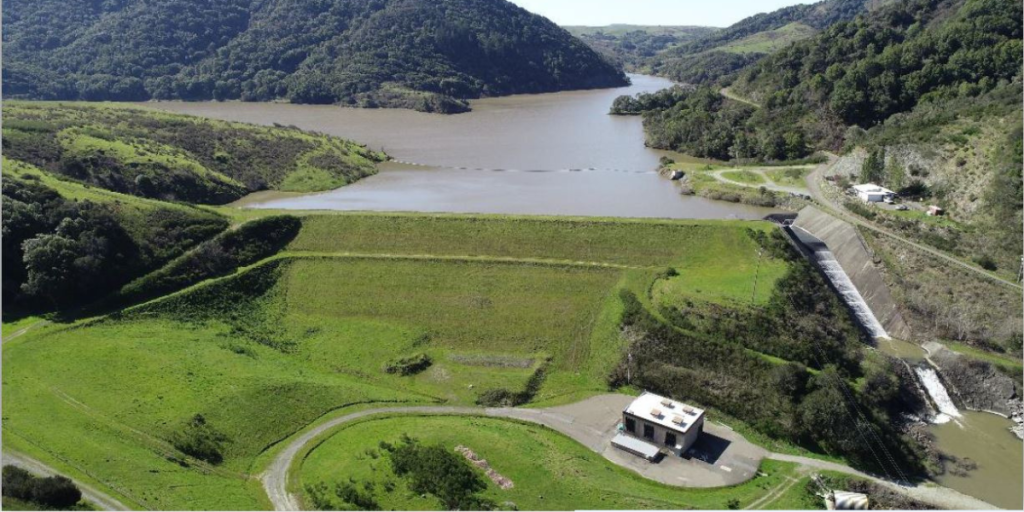
Soulajule Reservoir, located in western Marin, holds approximately 10,572 acre-feet of water – 13% of the District’s total local reservoir capacity. However, without a direct electrical connection, water can only be pumped from Soulajule to Nicasio Reservoir using portable diesel generators, limiting its use. This project would extend electrical power to the Soulajule Pump Station, enabling more routine and efficient transfers of water into the broader system. Electrification would support both operational flexibility and future efforts to store imported winter water, enhancing Marin Water’s ability to manage supplies more effectively.
Phoenix-Bon Tempe Connection
Estimated Water Supply = 260 acre-feet per year
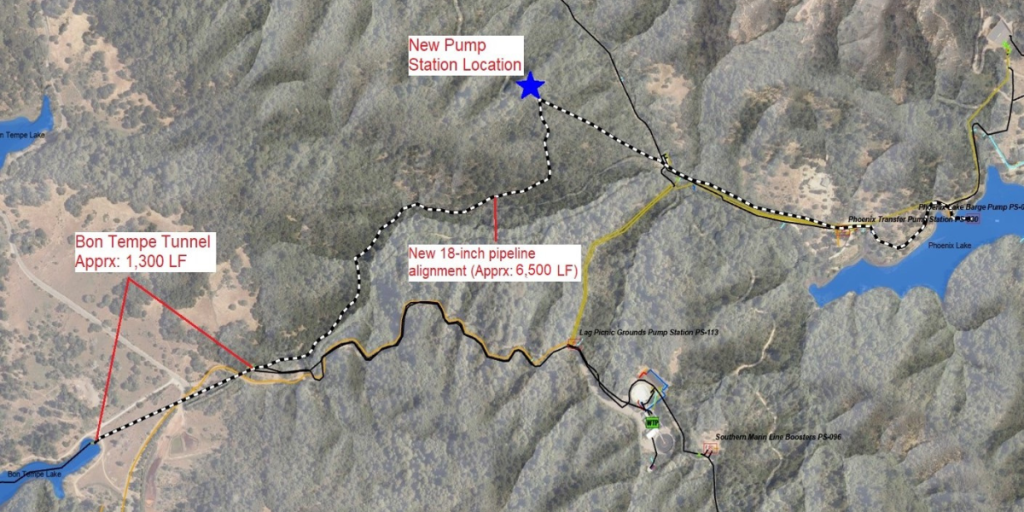
Although Phoenix Lake is one of Marin Water’s smallest reservoirs (411 acre-feet), it receives an average of 3,665 acre-feet in annual inflow. Currently, logistical challenges limit the District’s ability to move this water uphill to Bon Tempe Reservoir and its treatment plant. This project would establish a permanent pipeline between Phoenix Lake and Bon Tempe, enabling more frequent use of Phoenix’s inflows. In addition to improving water supply reliability, the project has a secondary benefit of reducing flood danger to the communities of Ross and San Anselmo by increasing storm water storage capacity in the Phoenix basin.
Given the relatively small water supply benefit, this project is not being prioritized at this time.
Forecasting and Stream Release Automation
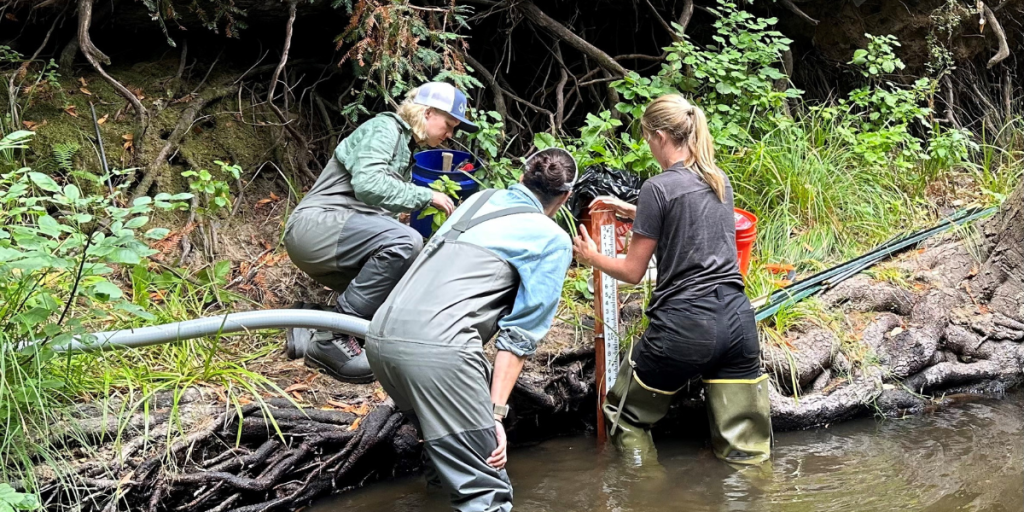
To improve streamflow management and forecasting accuracy, Marin Water is enhancing its monitoring infrastructure. New streamflow measurement equipment has been installed near Shafter Bridge and automation has been implemented at Walker Creek utilizing existing equipment. These tools will help the District better manage environmental releases and optimize reservoir operations, particularly during storm and drought periods. The District continues to closely monitor the piloted automation program.
Conveyance
Conveyance – Atmospheric River Capture Project
A new 13-mile pipeline would connect the North Marin Aqueduct to Nicasio Reservoir, allowing winter water from the Russian River to be stored for later use. The process for preliminary design and environmental review for this project is now getting underway.
Spillway Modifications for Storage Enlargement
Spillway Modifications for Storage Enlargement – Nicasio and other spillways
Nicasio Spillway Modification
Estimated Increase in Water Storage Capacity = approximately 3,700 acre-feet per year
Nicasio Reservoir was created by the construction of Seeger Dam, an earthen filled dam on Nicasio Creek in 1960. The reservoir’s current storage capacity is 22,340 acre-feet. This project proposes installing a 280-foot-long, 4.4-foot-high inflatable rubber gate spanning the width of the existing spillway crest of Seeger Dam to increase the capacity at Nicasio Reservoir by approximately 3,700 acre-feet. The additional water supply yielded through this project could help increase the District’s water supply resiliency during future droughts.
After extensive evaluation, Marin Water is no longer actively pursuing the proposed Nicasio Spillway Modification Project. While initial investigations suggested the potential for added reservoir storage at a relatively low cost, further study revealed:
– Significantly higher costs than originally anticipated
– Potential reductions in environmental yield
– Complex regulatory, ecological, and social considerations
The District will retain all work completed to date for future reference, but the project has been withdrawn from CEQA review and removed from active planning.
Other Spillway Modifications
The District continues to evaluate its other reservoir spillways to determine if there are potential opportunities to gain additional storage capacity through modifications to any of them.
Other Projects
Other Projects – Kent Lake Storage Enlargement, Desalination, Recycled Water
Kent Lake Storage Enlargement
Estimated water yield: 5,000 acre-feet per year
Marin Water has examined storage expansion projects at Kent Lake and at Soulajule Reservoir. Both projects would yield an additional 5,000 acre-feet per year, but based on environmental and private property factors, the District is focusing its ongoing work on storage expansion at Kent Lake, the District’s largest reservoir.
Located within a highly productive watershed, Kent Lake fills consistently with rainfall most years. Building on this proven reliability, the Kent Lake expansion project proposes to raise the existing dam at Kent Lake to increase the capacity of the reservoir by 20,000 acre-feet, making the new total capacity about 53,000 acre-feet. Rainfall would fill this additional available storage, which would serve as an emergency drought reserve.
The District will continue to investigate the feasibility of expanding this reservoir.
Desalination
Estimated Water Supply = 10,000 acre-feet per year
A treatment plant would be constructed along the Bayshore in San Rafael to purify bay water for use within the District’s system, delivering up to 10,000 acre-feet of water in a drought year, or about 25% of potable demand including environmental releases. The project would require significant storage and pumping to assist with integrating the treated water into Marin Water’s system to allow the plant to deliver up to its maximum rate of 10 million gallons per day. The desalination process would produce brine as a byproduct of the treatment process; that brine would be added to the existing Central Marin Sewer Agency outfall, thereby reducing the need to build a dedicated outfall.
The District will continue to monitor desalination technological advances and cost.
Recycled Water
Estimated Water Supply = 81-285 acre-feet per year
A variety of potential routes for expanding recycled water use in Marin County have been reviewed, including a project involving the Sewage Agency of Southern Marin, which would yield 81 acre-feet per year, to expanded recycled water pipeline along Peacock Gap to generate an additional 285 acre-feet per year.
The District continues to pursue outside funding opportunities for smaller recycled water projects that make sense for our service area.
Adaptive Roadmap Strategy
The roadmap is not a static plan, but an adaptive framework that allows Marin Water to pursue the most effective projects while remaining flexible as new information, technologies, or climate scenarios emerge. Future potential additions – such as expanded ARC phases, regional partnerships, or new storage technologies – will continue to be evaluated.
Progress Toward the Goal
Roadmap Projections as of August 2025 update to the Board of Directors:
| Component | Estimated Yield (Acre Feet per year) |
| Water efficiency | 2,000 |
| ARC (Phase 1) | 3,800 – 4,750 |
| In-System Improvements | 1,000 – 1,500 |
| Soulajule Enhancements | ~420 |
| Total Identified Supply | 7,220 – 8,670 |
How We Got Here
After recovering from a water shortage emergency in 2021, Marin Water set to work to strengthen the resiliency of its water supply to prepare for future droughts. A strategic water supply assessment was launched, and it guided development of the integrated Water Supply Roadmap being pursued today. Below is a timeline documenting these water supply resiliency efforts over the last several years.
Funding Acknowledgement

Funding for this project has been provided in full or in part from the Budget Act of 2021 and through an agreement with the State Department of Water Resources.
Timeline of Significant Events
| 2020 |
|
| 2021 |
|
| 2022 |
|
| 2023 |
|
| 2024 |
|
| 2025 |
|
| 2026 |
|
Selecting the Longer-Term Preferred Alternative Project
Throughout 2024 and 2025, the District reviewed available information and developed new information to thoroughly understand the longer-term projects included in the Roadmap. The project alternatives were all evaluated using the same standardized criteria listed in the below evaluation summary.
| Conveyance | Desalination Plant | Kent Lake Expansion | Soulajule Expansion | |
|---|---|---|---|---|
| Reliability & Sustainability1 | Good | Best | Good | Good |
| Flexibility & Resiliency2 | Best | Poor | Best | Best |
| Schedule & Implementation3 | Best | Poor | Poor | Poor |
| Water Quality4 | Best | Good | Best | Best |
| Environment5 | Best | Poor | Good | Good |
| Social Stewardship6 | Best | Good | Best | Poor |
| Economic & Financial7 | Best | Poor | Good | Good |
1 Reliability & Sustainability: Contributes to dry year supply and substantially improves reliability of the system, improving system response to disaster
2 Flexibility & Resiliency: Operational flexibility and operational complexity; improves resiliency of system; integrates and maximizes regional systems
3 Schedule & Implementation: Timeframe for implementation, considering regulatory complexity and constructability; does not preclude future projects
4 Water Quality: Meets current and future drinking water quality standards; the water is of the same quality as existing water supplied by District
5 Environment: Continues to meet the District’s commitment to environmental stewardship; extent of environmental impacts during and post construction
6 Social Stewardship: Extent of disruption to existing land uses
7 Economic & Financial: Project lifecycle costs relative to water supply yield; extent to which project uses existing infrastructure
Completed Reports
- Strategic Water Supply Assessment (2023)
- Water Supply Conveyance Improvements Project (2025)
Stay Informed
Past Public Meetings
Sign up for Marin Water’s monthly eNews
Subscribe at marinwater.org/enews.
Review Board Presentations on Roadmap Efforts
Since the launch of Marin Water’s water supply resiliency planning process, updates and key decisions have been shared during Board and Committee meetings, which are open to the public. Below, you can find a compiled record of those meetings, including links to related agendas, presentations, and video recordings.
Compilation of All Public Meetings on Water Supply Resiliency Efforts
Strategic Water Supply Assessment | Water Supply Roadmap | Conveyance & Storage | Desalination & Recycled Water | Nicasio Spillway Modification | Soulajule Pump Station Electrification | Phoenix Lake to Bon Tempe Reservoir Connection | Water Efficiency Master Plan
Strategic Water Supply Assessment
- February 28, 2023 – Board of Directors Special Meeting
Agenda Item 1: Strategic Water Supply Assessment – Presentation of Roadmap Options
Watch meeting recording and view documents - February 2, 2023 – Board of Directors Special Meeting (Board Retreat)
Watch meeting recording and view presentation (slide #s 74 -83) - January 24, 2023 – Special Meeting of the Board of Directors
Agenda Item 1: Strategic Water Supply Assessment – Portfolio & Roadmaps
Watch meeting recording and review documents - January 3, 2023 – Board of Directors Regular Meeting
Agenda Item 12: Water Supply Update
Watch meeting recording and review documents - December 13, 2022 – Board of Directors Regular Meeting
Agenda Item 7: Water Management Portfolios for the Strategic Water Supply Assessment
Watch meeting recording and review documents - November 15, 2022 – Board of Directors Regular Meeting
Agenda Item 9: Review of Demand Management for the Strategic Water Supply Assessment
Watch meeting recording and view documents - October 25, 2022 – Special Meeting of the Board of Directors (Strategic Water Supply Assessment Virtual Community Workshop #4)
Watch meeting recording and view documents - October 18, 2022 – Board of Directors Regular Meeting
Agenda Item 8: Water Supply Update
Watch meeting recording and view documents - September 27, 2022 – Special Meeting of the Board of Directors
Agenda Item 1: Strategic Water Supply Assessment – Project Evaluation Criteria
Watch meeting recoding and view documents - September 13, 2022 – Special Meeting of the Board of Directors
Agenda Item 1: Strategic Water Supply Assessment
Watch meeting recording and view documents - September 6, 2022 – Board of Directors Regular Meeting
Agenda Item 5: Next Steps of the Water Conservation Element for the Strategic Water Supply Assessment
Watch meeting recording and view documents - August 2, 2022 – Board of Directors Regular Meeting
Agenda Item 4: Strategic Water Supply Assessment – Review of Conservation as a Water Supply Alternative
Watch meeting recording and view documents - July 28, 2022 – Special Meeting of the Board of Directors (Strategic Water Supply Assessment Virtual Community Workshop #3)
Watch meeting recording and view documents - July 19, 2022 – Board of Directors Regular Meeting
Agenda Item 8: Strategic Water Supply Assessment – Review of Water Supply Alternatives (Interties, Sonoma County Based Options and Local Storage Enhancement)
Watch meeting recording and view documents - July 12, 2022 – Special Meeting of the Board of Directors
Agenda Item 1: Strategic Water Supply Assessment – Review of Desalination and Recycled Water Options
Watch meeting recording and view documents - July 5, 2022 – Board of Directors Regular Meeting
Agenda Item 7: Water Supply Update Presentation
Watch meeting recording and view documents - June 28, 2022 – Special Meeting of the Board of Directors
Agenda Item 1: Strategic Water Supply Assessment – Initial Review of Water Management Options
Watch meeting recording and view documents - June 21, 2022 – Board of Directors Regular Meeting
Agenda Item 8: Strategic Water Supply Assessment Update
Watch meeting recording and view documents - June 14, 2022 – Special Meeting of the Board of Directors
Agenda Item 1: Strategic Water Supply Assessment – Scenario Planning
Watch meeting recording and view documents - June 2, 2022 – Water Supply Strategic Assessment Virtual Community Workshop #2
Watch meeting recording and view documents - May 24, 2022 – Special Meeting of the Board of Directors
Agenda Item 3 – Strategic Water Supply Assessment
Watch meeting recording and view documents - May 10, 2022 – Special Meeting of the Board of Directors
Agenda Item 1: Strategic Water Supply Assessment
Watch meeting recording and view documents - April 26, 2022 – Special Meeting of the Board of Directors
Agenda Item 1: Strategic Water Supply Assessment
Watch meeting recording and view documents - March 9, 2022 – Water Supply Strategic Assessment Virtual Community Workshop #1
Watch meeting recording and view documents - February 1, 2022 – Board of Directors Regular Meeting
Agenda Item 9: Professional Services Agreement with Jacobs Engineering Group for Engineering Services in Support of the Strategic Water Supply Assessment Project
Watch meeting recording and view documents
Water Supply Roadmap
- June 2, 2026 – Board of Directors Regular Meeting
Agenda Item 7a: Presentation – Amendment No. 3 to Professional Services Agreement with Woodard and Curran.
Watch meeting recording and view documents - Aug. 19, 2025 – Board of Directors Regular Meeting
Agenda Item 9b: Water Supply Roadmap Update
Watch meeting recording and view documents - January 21, 2025 – Board of Directors Regular Meeting
Agenda Item 9a: Update on Water Supply Roadmap
Watch meeting recording and view documents - January 7, 2025 – Board of Directors Regular Meeting
Agenda Item 9a: Update on Water Supply Roadmap
Watch meeting recording and view documents - December 10, 2024 – Board of Directors Regular Meeting
Agenda Item 10b: Water Supply Roadmap Update on Costs
Watch meeting recording and view documents - July 2, 2024 – Board of Directors Regular Meeting
Agenda Item 9a: Water Supply and Roadmap Update
Watch meeting recording and view documents - March 14, 2024 – Board of Directors Special Meeting (Board Retreat)
Watch meeting recording and view documents - January 12, 2024 – Operations Committee Meeting/Special Meeting of the Board of Directors
Agenda Item 4e: Update on the Water Supply Roadmap
Watch meeting recording and view documents - October 10, 2023 – Board of Directors Regular Meeting
Agenda Item 8b: Water Supply Roadmap Update
Watch meeting recording and view documents - August 15, 2023 – Board of Directors Regular Meeting
Agenda Item 6: Update on Water Resiliency Roadmap
Watch meeting recording and view documents - June 6, 2023 – Board of Directors Regular Meeting
Agenda Item 8 – Update on Water Resiliency Roadmap
Agenda Item 9 – Amendment No. 1 to Professional Services Agreement with Woodard and Curran for Program Management and Technical Services to Support the Implementation of the Integrated Roadmap
Watch meeting recordings and view documents - April 21, 2023 – Operations Committee Meeting/Special Meeting of the Board of Directors
Agenda Item 3: Update on Water Resiliency Roadmap
Watch meeting recording and view documents - March 21, 2023 – Board of Directors Regular Meeting
Agenda Item 10: Water Supply and Roadmap Update
Watch meeting recording and view documents
Conveyance & Storage
- Aug. 18, 2026 – Board of Directors Regular Meeting
Agenda Item 7c: Nicasio Vegetation Management Project
Agenda item 7d: Amendment No. 2 to Professional Services Agreement with Environmental Science Associates (ESA) for the Nicasio Hydrology Study
Watch meeting recording and view documents - July 7, 2026 – Board of Directors Regular Meeting
Agenda Item 7b: Presentation – Water Supply and ARC Project Update
Watch meeting recording and view documents - May 13, 2026 – Board of Directors Regular Meeting
Agenda Item 7b: Presentation – ARC Update
Watch meeting recording and view documents - March 17, 2026 – Board of Directors Regular Meeting
Agenda Item 7b: Presentation – Amendment No. 1 to Agreement with Carollo Engineers for ARC Design Project
Watch meeting recording and view documents - Feb. 3, 2026 – Board of Directors Regular Meeting
Agenda Item 8b: Presentation – ARC Update
Watch meeting recording and view documents - Nov. 4, 2025 – Board of Directors Regular Meeting
Agenda Item 9c: Presentation – ARC Update
Watch meeting recording and view documents - June 3, 2025 – Board of Directors Regular Meeting
Agenda Item 9b: Award of Environmental Services Contract for Atmospheric River Capture Project
Watch meeting recording and view documents - April 15, 2025 – Board of Directors Regular Meeting
Agenda Item 9a: Atmospheric River Capture Project – Award of Engineering Design
Watch meeting recording and view documents - February 25, 2025 – Board of Directors Regular Meeting
Agenda Item 9a: Water Supply Roadmap – Selection of a Preferred Project to Move Into Design and Environmental Review
Watch meeting recording and view documents - August 16, 2024 – Operations Committee Meeting/Special Meeting of the Board of Directors
Agenda Item 4d: Water Supply Roadmap Update on Cost of Conveyance to Storage
Watch meeting recording and view documents - April 30, 2024 – Board of Directors Regular Meeting
Agenda Item 9c: Update on the Water Supply Roadmap – Local Storage Alternatives
Watch meeting recording and view documents - April 2, 2024 – Board of Directors Regular Meeting
Agenda Item 8b: Update on the Water Supply Roadmap – Conveyance Alternatives
Watch meeting recording and view documents - March 19, 2024 – Board of Directors Regular Meeting
Agenda Item 8d: Update on the Water Supply Roadmap Local Storage Project
Watch meeting recording and view documents - February 27, 2024 – Board of Directors Regular Meeting
Agenda Item 8b: Update on the Water Supply Roadmap Long Term Projects
Watch meeting recording and view documents - September 19, 2023 – Board of Directors Regular Meeting
Agenda Item 3: Professional Services Agreement with Terra/GeoPentech for Engineering Services to Develop a Preferred Alternative for Improving the Water Supply Storage Project
Watch meeting recording and view documents - September 5, 2023 – Board of Directors Regular Meeting
Agenda Item 4 – Professional Services Agreement with Carollo Engineers
Agenda Item 7 – Water Supply Storage Improvements Project
Watch meeting recording and view documents - August 18, 2023 – Operations Committee Meeting/Special Meeting of the Board of Directors
Agenda Item 3: Marin-Sonoma Winter Water Intertie Project
Watch meeting recording and view documents
Desalination & Recycled Water
- Dec. 1, 2025 – Special Meeting of the Board of Directors (Board Retreat)
Agenda Item 3: Presentation – Recycled Water Overview and Potential Opportunities
Watch meeting recording and view documents - Aug. 26, 2025 – Planning Committee/Special Meeting of the Board of Directors
Agenda Item 4d: Recycled Water System Update
Watch meeting recording and view documents - April 1, 2025 – Board of Directors Regular Meeting
Agenda Item 9b: Recycled Water System Update
Watch meeting recording and view documents - June 18, 2024 – Board of Directors Regular Meeting
Agenda Item 10b: Review of Desalination and Recycled Water Costs
Watch meeting recording and view documents - March 19, 2024 – Board of Directors Regular Meeting
Agenda Item 8c: Recycled Water Update
Watch meeting recording and view documents - November 17, 2023 – Operations Committee Meeting/Special Meeting of the Board of Directors
Agenda Item 4c: Recycled Water Update
Watch meeting recording and view documents - October 10, 2023 – Board of Directors Regular Meeting
Agenda Item 7b: Professional Services Agreement for Petaluma Brackish Desalination Investigation
Watch meeting recording and view documents - September 15, 2023 – Operations Committee Meeting/Special Meeting of the Board of Directors
Agenda Item 5: Water Supply Roadmap – Update on Petaluma River Desalination and Referral of a Proposal for Additional Research and Analysis
Watch meeting recording and view documents
Nicasio Spillway Modifications
- May 27, 2025 – Planning Committee/Special Meeting of the Board of Directors
Agenda Item 4d – Nicasio Spillway Modification Project Update
Watch meeting recording and view documents - February 13, 2025 – Planning Committee/Special Meeting of the Board of Directors
Agenda Item 4d – Nicasio Spillway Modification Project Update
Watch meeting recording and view documents - November 6, 2024 – Board of Directors Regular Meeting
Agenda item 9b: Nicasio Spillway Environmental Compliance Contract
Watch meeting recording and view documents - October 18, 2024 – Operations Committee Meeting/Special Meeting of the Board of Directors
Agenda Item 4b: Nicasio Spillway Modification Project Environmental Review and Permitting Services
Watch meeting recording and view documents - July 2, 2024 – Board of Directors Regular Meeting
Agenda Item 8d: Spillway Modifications Alternatives Selection and Design
Watch meeting recording and view documents - June 21, 2024 – Operations Committee Meeting/Special Meeting of the Board of Directors
Agenda Item 4b: Spillway Modifications Alternatives Selection and Design
Watch meeting recording and view documents - April 30, 2024 – Board of Directors Regular Meeting
Agenda Item 9b: Spillway Capacity and Sub-Surface Condition Assessment
Watch meeting recording and view documents
Soulajule Pump Station Electrification
- December 19, 2023 – Board of Directors Regular Meeting
Agenda Item 8e: Professional Services Agreement with Kennedy/Jenks Consultants, Inc. for Engineering Services for the Soulajule Pipeline Project
Watch meeting recording and view documents - July 21, 2023 – Operations Committee Meeting/Special Meeting of the Board of Directors
Agenda Item 5: Water Resilience Roadmap – Update on Phoenix and Soulajule Projects
Watch meeting recording and view documents
Phoenix to Bon Tempe Reservoir Connection
- June 18, 2024 – Board of Directors Regular Meeting
Agenda Item 9a: Adoption of the Final Initial Study/Mitigated Negative Declaration for Phoenix-Bon Tempe Connection Project and Approval of the Phoenix-Bon Tempe Connection Project
Watch meeting recording and view documents - March 8, 2024 – Operations Committee Meeting/Special Meeting of the Board of Directors
Agenda Item 4d: Phoenix-Bon Tempe Connection Project Update
Watch meeting recording and view documents - December 19, 2023 – Board of Directors Regular Meeting
Agenda Item 8d: Professional Services Agreement with Hazen and Sawyer for Engineering Services for design of the Phoenix-Bon Tempe Pump Station Design Project
Watch meeting recording and view documents - July 21, 2023 – Operations Committee Meeting/Special Meeting of the Board of Directors
Agenda Item 5: Water Resilience Roadmap – Update on Phoenix and Soulajule Projects
Watch meeting recording and view documents - February 18, 2022 – Operations Committee Meeting/Special Meeting of the Board of Directors
Agenda Item 3 – Phoenix Lake Raw Water Transfer Pump Station Presentation
Watch meeting recording and view documents
Water Efficiency Master Plan
- May 26, 2026 – Board of Directors Regular Meeting
Agenta Item 7a: Presentation – Contract Award for AMI and Approval of Positions for AMI Implementation
Watch meeting recording and view documents - March 24, 2026 – Planning Committee/Special Meeting of the Board of Directors
Agenda Item 4e: Presentation – AMI Update
Watch meeting recording and view documents - Dec. 1, 2025 – Special Meeting of the Board of Directors (Board Retreat)
Agenda Item 4: Presentation – Water Efficiency – AMI Rollout Plan, Review, and Next Steps
Watch meeting recording and view documents - Sept. 23, 2025 – Planning Committee/Special Meeting of the Board of Directors
Agenda Item 4d: Presentation – Water Efficiency – AMI Rollout Plan, Review, and Next Steps
Watch meeting recording and view documents - Aug. 26, 2025 – Planning Committee/Special Meeting of the Board of Directors
Agenda Item 4c: Water Efficiency School Education Program Update
Watch meeting recording and view documents - June 24, 2025 – Planning Committee/Special Meeting of the Board of Directors
Agenda Items 4b & 4c: Water Efficiency Master Plan Status Update & Advanced Metering Infrastructure (AMI) Update
Watch meeting recording and view documents - May 27, 2025 – Planning Committee/Special Meeting of the Board of Directors
Agenda Item 4e: Advanced Metering Infrastructure (AMI) Update
Watch meeting recording and view documents - March 25, 2025 – Planning Committee/Special Meeting of the Board of Directors
Agenda Item 4b: Water Efficiency Update – Advanced Metering Infrastructure (AMI)
Watch meeting recording and view documents - Nov. 20, 2024 – Communications & Water Efficiency Committee Meeting/Special Meeting of the Board of Directors
Agenda Item 4b: Water Efficiency Update
Watch meeting recording and view documents - Oct. 18, 2024 – Operations Committee Meeting/Special Meeting of the Board of Directors
Agenda Item 4d: Water Loss Update
Watch meeting recording and view documents - Sept. 20, 2024 – Operations Committee Meeting/Special Meeting of the Board of Directors
Agenda Item 4b: Advanced Metering Infrastructure (AMI) Update
Watch meeting recording and view documents - Sept. 17, 2024 – Board of Directors Regular Meeting
Agenda Item 9a: Ordinance No. 466 Establishing Turf Limits and Updating the District Fixture Standards
Watch meeting recording and view documents - Aug. 21, 2024 – Communications & Water Efficiency Committee Meeting/Special Meeting of the Board of Directors
Agenda Item 4b: Water Efficiency Program Update
Watch meeting recording and view documents - Aug. 6, 2024 – Board of Directors Regular Meeting
Agenda Item 9a: New Development Turf Limits
Watch meeting recording and view documents - July 16, 2024 – Board of Directors Regular Meeting
Agenda Item 9a: 2024 Water Efficiency Master Plan
Watch meeting recording and view documents - May 21, 2024 – Board of Directors Regular Meeting
Agenda Item 8g: Water Efficiency Program – Proposed Changes to Incentives
Watch meeting recording and view documents - May 15, 2024 – Communications & Water Efficiency Committee Meeting/Special Meeting of the Board of Directors
Agenda Item 4b: Water Efficiency Program – Proposed Changes to Incentives and Policy
Watch meeting recording and view documents - May 1, 2024 – Board of Directors Special Meeting
Agenda Item 2a: Water Efficiency Master Plan Workshop
Watch meeting recording and view documents - February 28, 2024 – Communications & Water Efficiency Committee Meeting/Special Meeting of the Board of Directors
Agenda Item 4b: Water Efficiency Update
Watch meeting recording and review documents - November 15, 2023 – Communications & Water Efficiency Committee Meeting/Special Meeting of the Board of Directors
Agenda Item 4b: Water Efficiency Master Plan Update
Watch meeting recording and review documents - February 15, 2023 – Communications & Water Efficiency Committee Meeting/Special Meeting of the Board of Directors
Agenda Item 2: Water Efficiency Master Plan Update
Watch meeting recording and review documents - February 16, 2022 – Communications & Water Efficiency Committee Meeting
Agenda Item 2: Water Efficiency Update
Watch meeting recording and view documents